
This piece began with a book. I was reading The Intelligence Trap, David Robson's study of how smart people end up believing foolish things, and in his material on intelligence and emotional intelligence a thought I was not looking for hit me like a brick. Robson never builds a formal theory of romance; what he shows is educated minds using their full horsepower to rationalize attachments they have already formed. And I realized I was not reading about romance at all. I was reading about why people attend the systems of Western Christianity, and just as much, about what moves pastors and churches to curate those systems. It is all about romantic emotional intelligence. I wrote this essay to lay the bricks down so you can actually find it and see it.
The people who study human reasoning keep colliding with the same uncomfortable finding. Intelligence does not protect a person from believing false things. It equips him to defend them. Raise the IQ, add the degrees, and you do not get a better judge. You get a better lawyer.
Watch the mechanism where we all know it best. Nobody reasons his way into love. The attachment arrives first, uninvited, and then the mind goes to work: cataloging virtues, explaining away warnings, building a case that sounds airtight to everyone except the friends watching from outside. Call it romantic logic. The conclusion was never on trial. The heart decided, and then the heart hired the mind.
It is this very logic that justifies Western Christianity. The great systematic apparatus, centuries of it, is romantic logic wearing academic robes. That will sound like an insult. Stay with me. It is a diagnosis, and Scripture made it long before the researchers did.
The Word Behind the Word
Your English Bible splits you in two. The heart feels; the head thinks. Keep the head cool and it will police the heart. The entire Western confidence in its own theology rests on that split.
Hebrew refuses it. The lev is not a feeling organ standing across from a thinking brain. In the Tanakh a man thinks in his lev, plans in his lev, talks to himself in his lev. It is the seat of reasoning itself. Which is why the verse Yirmeyahu (Jeremiah) wrote should have ended the Western confidence in one line:
The lev is aqov above all things, and desperately sick; who can know it?
Yirmeyahu, Jeremiah 17:9
Aqov is usually translated deceitful, and the translation is too tame. The word means crooked, uneven, the way a hill path is crooked: ground that looks walkable and turns an ankle. It comes from the heel root, the same root that named Ya'akov (Jacob), the heel-grabber who supplanted his brother. The lev is heel-grabbing terrain, and it is working an angle.
Now read the verse the Hebrew way. Yirmeyahu is not warning that your feelings are unreliable and your reason had better take the wheel. There is no separate wheel. The organ that reasons is the organ that deceives. The mind you would use to audit your loves is already on your loves' payroll.
You walk this terrain daily. Replay the last argument you had with someone you love: the replay feels like reflection, and somehow the verdict always comes back in your favor. Watch what your hands do with evidence: the study that confirms you gets a glance and a nod; the study that troubles you gets audited line by line until a flaw surrenders. Your feed learned the angle years ago; it shows you a world your lev already agreed to. None of it feels crooked from the inside. Aqov ground never does; it looks like footing.
The very next verse tells you where the audit went: I, YHWH, search the lev, Yirmeyahu, Jeremiah 17:10. The examination is external, because the internal examiner is compromised. Twenty-six centuries before anyone measured motivated reasoning in a laboratory, the prophet had filed the finding. The Table has walked the near edge of this ground already: what Scripture knew before Dunning and Kruger named the overconfident eye. This essay follows the same finding one level down, from the eye that misjudges its skill to the lev that hires its own judge.
The Lover's Brief
Alfred Adler, watching his patients a century ago, gave the mechanism a name that deserves wider use: private logic. Reasoning built in service of a goal already chosen. The goal stays fixed and hidden; the arguments are staffed to it afterward.
You have seen it. A friend in a disastrous relationship does not lack arguments. He has the best arguments you have ever heard: the outbursts explained, the lies contextualized, the pattern reframed as passion. His intelligence never got a vote on the verdict; it got a job on the defense team. The research says the same thing with charts: education does not reduce the bias. It upgrades the briefs.
Sha'ul (Paul) named the mechanism in the first century without a laboratory. The time will come, he told Timothy, when people will not endure sound teaching, but according to their own desires will accumulate teachers to suit their passions, 2 Timothy 4:3. Read the order of operations. Desire first. Teachers after. The passions do the hiring, and the hired teaching arrives wearing whatever credentials the era respects. We are wise in our own eyes precisely where we are most attached.
The Same Engine, Dressed in Robes
Now the harder half of the claim.
Western Christianity did not build its theology the way it tells the story: neutral minds following the text wherever it led. It built the way lovers build. The attachments came first: to an imperial settlement that needed the faith governable, to institutions that needed their own authority necessary, to systems men had given their lives to and could not afford to lose. Then the finest minds of every century were hired, sincerely and often unknowingly, to write the brief.
Watch the vocabulary alone. The language of the Roman courtroom entered through Tertullian's Latin: merit, satisfaction, guilt, categories no Hebrew prophet used for the covenant. A thousand years later Anselm sat down to prove the atonement by reason alone, remoto Christo, Messiah set aside as a premise, and the necessities his reason discovered were, to the letter, the necessities of the feudal honor system outside his window. Calvin came to the text trained as a lawyer at Orléans and Bourges, and the system he produced argues like it. Each system is brilliant. Each generation points at the brilliance as proof of soundness.
Brother, hear me: the brilliance is the tell, not the defense. Rigor is exactly what romantic logic produces when it is well funded and given centuries. Coherence measures investment, not truth. A tradition famous for the beauty of its system is famous for the quality of its briefs, and the most coherent brief in the library is still a brief.
There is a tell inside the tell. The same tradition teaches that the fall corrupted every human faculty, then exempts the faculty that built the system. The doctrine ate itself, and nobody at the table noticed, because noticing was not the job the mind had been hired to do.
Hold one thing steady. This needs no villains. Anselm was not a cynic and Calvin was not a fraud; sincere men love sincerely, and that is what makes the logic romantic. Good faith was never the question. The question is who chose the conclusion.
Where the Two Logics Part
So where do the two logics part? The difference matters more than the resemblance.
First, collision. The lover's logic has an expiration date. He wakes up next to the actual person; reality keeps the breakfast appointment, and one morning the brief collapses. An institution never has to keep that appointment. It writes its conclusions into creeds before the questions arrive and attaches penalties to the man who notices. Romantic logic in one man dies with his illusions. In a tradition, it outlives every man who might have been disillusioned.
Second, choice. The lover at least chose his beloved. Yours was chosen for you: the attachment and the finished arguments handed to you in the same crib, the first question you ever asked already phrased in the system's grammar.
Third, the beloved itself. A lover defends a person, and a person can surprise him back into the truth: she can change, confess, walk out, forgive. A system defends a frame, and frames cannot speak.
Add it up. Western Christian logic is not a lesser cousin of romantic logic. It is romantic logic with the exits sealed: the collision removed, the choice inherited, the beloved rendered mute.
The Berean Answer
What do you do with a compromised lev? You do not out-think it. There is no vantage point inside you from which the private logic can be audited by the mind that wrote it. Scripture's answer is an exterior standard.
Luke praises the assembly at Berea for two things in one breath: they received the word with all eagerness, and they examined the Scriptures daily to see whether these things were so, Acts 17:11. Hold both halves. Eagerness is attachment honestly owned; the Bereans were not impressed, they were suspicious, and the suspicion was aimed at themselves as much as at Sha'ul. They did not trust their own delight; they carried it to the text, daily, and let the text rule.
That is the whole discipline. Not colder hearts; tested loves. The intellect is not fired, it is reassigned: no longer counsel for the defense, now a witness under oath. And the search Yirmeyahu promised becomes something you can ask for instead of dread. Search me, El, and know my lev; test me, and know my anxious thoughts; see if there be any grievous way in me, Tehillim, Psalms 139:23-24. David hands YHWH the audit the lev cannot run on itself.
What Keeps You Hooked
Adler would ask one more question of the man who cannot put the brief down: what is the arrangement paying you? Nobody stays in a logic that pays nothing.
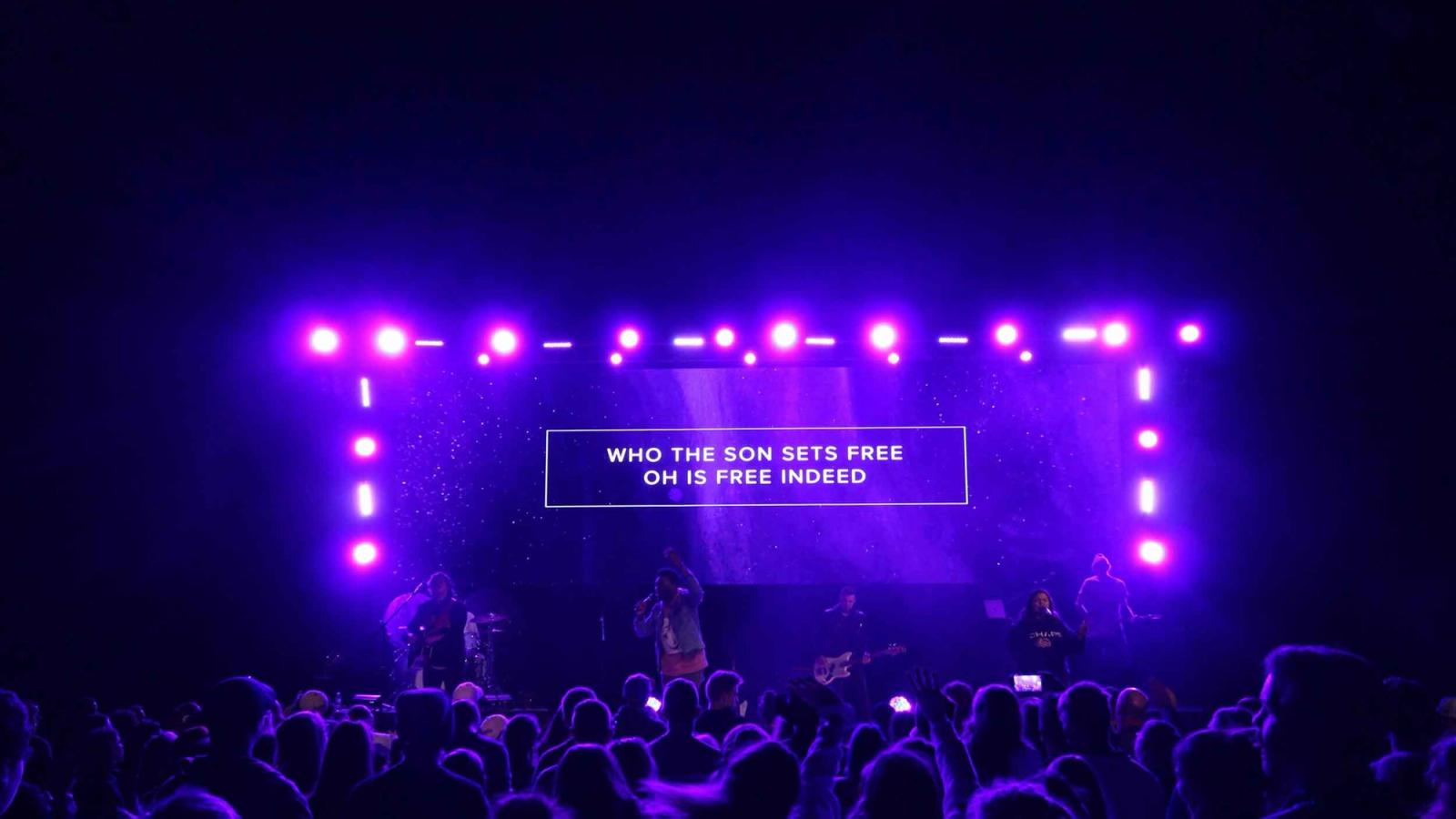
Here is what it pays. Once a week you walk into a room built to make you feel. The lights come down, the band swells, the music climbs for twenty minutes until your chest is full, and your lev files the feeling as evidence: I felt Him, so the system must be true. Watch what just happened. The feeling is real. The filing is the fraud. A room full of engineering produced an emotion, and the emotion was entered as confirmation of the doctrine, the institution, and the whole inherited brief. And the men who built the room? Most are not cynics running a con; they are inside the same romance, and curating it is how they keep feeling it too.
The first-century assembly sang; a psalm at a table, a hymn before walking out into the night, Matthew 26:30. What it did not have was the production: the staged ascent, the dose administered weekly, right when the week's doubts had accumulated. That is not the history of worship. That is the maintenance schedule of an attachment. Romance needs date nights. So does romantic logic.
And beneath the payoff sits the avoidance. The brief is not protecting a conclusion; it is protecting you from the bill. People do not stay in this logic because the arguments convince them. They stay because they do not want to face what changes if this is true. That is the next section. Feel the pull to skip it? That pull is the thing we have been describing.
What Changes If This Is True
If the strongest evidence you have for your theology is a feeling you get in a room engineered to produce it, you do not have evidence. You have a romance on a maintenance plan.
There is one honest test, and it is not the quality of your defenses and not the depth of what you felt on Sunday. It is whether the text has ever overruled one of your loves. If your Bible has never cost you a conclusion you cherished, never broken a doctrine you inherited, never made you put down a brief you spent years writing, then face the possibility that you are not reading it. You are courting it, and it has been answering in your own voice. The measure of a mind under the covenant is not how well it argues, and not how deeply it feels. It is how much it has been willing to lose.
Remember, at the end of the day, our decisions matter, and our relationship with the God of the universe is what matters most. All I'm trying to do is encourage you to build a healthy one.
Selah.
Sit with these before you move on:
- Name the place where the text overruled a love of yours. If no place comes to mind, who has been hiring whom?
- The doctrine you defend most fiercely: did you reason your way into it, or did you inherit it and reason afterward?
- What would it cost you to be wrong about it? Be specific. Then ask whether that cost has been doing your arguing.
- The last time you felt Him in the music: what exactly did you enter into evidence, and who built the room?
Shalom v'shalvah, your brother in the Way,
Sergio