
You know the stories. The breath in the dust, the fruit, the sea, the mountain on fire, the tent, the manger, the cross, the empty tomb, the throne. You could name them with your eyes shut, and that recall was faithfulness, and I am not taking it from you. What I want to hand you is the complete story they belong to, because I sat under the same sermons for most of my life and was never shown it. Scripture opens with God breathing a world out of His mouth, and it ends with God dwelling among His people with nothing between Him and them. The pulpit preaches the middle. Every episode, true, in order. Never the arc. In my opinion the arc was cut on purpose, and the purpose is older than any man now preaching: you cannot have the arc and a church, as men have built it, at the same time.
On a Saturday evening in April I sat in a non-denominational church, felt like I was inside the Matrix, and wrote three sentences in my notes: "Every text was corporate. Every application was individual. The Tanakh was functionally absent from every passage." That is what the middle sounds like from the pew, and I would rather you check me than believe me.
Breathed from His Mouth
The book opens on a voice. Ten times in the first chapter, and God said, and each time the thing said is there. בִּדְבַר יְהוָה שָׁמַיִם נַעֲשׂוּ, by the word of YHWH the heavens were made, and all their host by the breath of His mouth, Tehillim, Psalms 33:6. Davar is the word. Ruach is the breath.
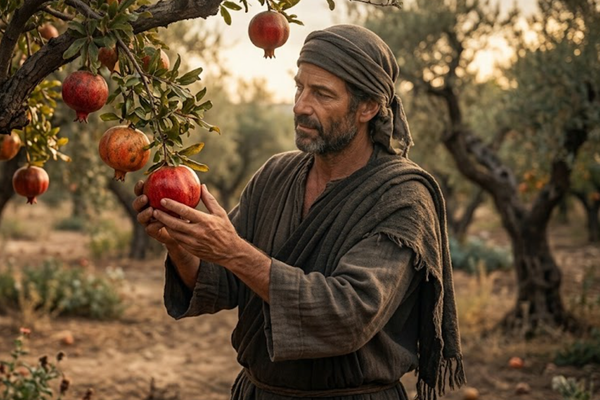
The man is made differently. YHWH God forms him from the dust and breathes into his nostrils the breath of life, נִשְׁמַת חַיִּים (nishmat chayyim), and the man becomes a living being, Bereshit, Genesis 2:7. The heavens get the word. The man gets the breath, at the nostrils, the one creature made in His image, Bereshit, Genesis 1:27. That is where the text starts: His breath inside a man, and nothing in the verse between them.
Intimacy, and the Choice
YHWH God plants a garden in Eden and puts the man in it, Bereshit, Genesis 2:8. Then a command with a you in it: of every tree you may freely eat, of this one you shall not, Bereshit, Genesis 2:16-17. The chapter closes on their skin: the two of them were naked, the man and his wife, and were not ashamed, וְלֹא יִתְבֹּשָׁשׁוּ, Bereshit, Genesis 2:25. Nothing in these two chapters stands between the man and his Maker. He speaks; the man hears.
The way I take this, that closeness is the design. A breath at the nostrils is given from no farther than one face is from another; He walks in His own garden at the breeze of the day; they stand before Him with no clothing and no shame. Nothing between them is in the verses themselves, in what they leave out, and the leaving-out was intended.
Then the woman, then the serpent, then five verbs that are all hers and his: she saw, she took, she ate, she gave, he ate, Bereshit, Genesis 3:6. No verb in the sentence pushes them. Then the consequence, and the gate: cherubim and a flaming sword keeping the way to the tree of life, Bereshit, Genesis 3:24.
Between the eating and the sentence sits one verse. They hear the sound of YHWH God walking in the garden at the breeze of the day, מִתְהַלֵּךְ בַּגָּן לְרוּחַ הַיּוֹם, and the man and his wife hide from His presence among the trees, Bereshit, Genesis 3:8. The verb is mithalekh, the walking-about form of halakh; the word for the breeze is ruach. He walks in the garden. They hide. That is the first distance in the book between a man and His voice, and the first word He speaks into it is a question, ayyekah, where are you, Bereshit, Genesis 3:9.
That I May Dwell Among Them
Then Israel, and a tent. After the sea and the blood of the covenant, Shemot, Exodus 24:8, YHWH tells Moshe (Moses) what to build and why: וְעָשׂוּ לִי מִקְדָּשׁ וְשָׁכַנְתִּי בְּתוֹכָם, let them make Me a sanctuary, that I may dwell among them, Shemot, Exodus 25:8. The verb is shakhan, to settle in and stay; its noun is the mishkan, the dwelling, the tent. The purpose clause is in His own mouth.
The man standing between is in theirs. At the mountain, before the tent, the people stood far off and said to Moshe: let not God speak with us, lest we die, Shemot, Exodus 20:18-19. He asked for the dwelling. They asked for the go-between. The text keeps the two in separate mouths.
Inside the tent, the parochet, woven with cherubim, divides between the holy place and the holy of holies, Shemot, Exodus 26:31 and Exodus 26:33; the text gives it that job by design. And in the covenant blessing, the garden verb returns: I will set My mishkan among you, and I will walk among you, וְהִתְהַלַּכְתִּי בְּתוֹכְכֶם, Vayikra, Leviticus 26:11-12. Hithalakhti: the garden's walking-about form.
When Solomon builds the tent into a house, the text measures the inner room. The devir, the holy of holies, is twenty cubits long, twenty cubits wide, and twenty cubits high, Melachim Aleph, 1 Kings 6:20. Equal on every side: a cube, with the partition in front of it.
Not a New Religion
The fourth Gospel opens where Bereshit opens, in the beginning, with the Word, and says what the Word did: the Word became flesh and dwelt among us, and we saw His glory, John 1:14. The verb is eskēnōsen, from skēnē, a tent, the Greek Tanakh's noun for the mishkan. He pitched His tent among us, and the glory the text had set behind a partition is seen.
Skēnē is also the Greek Tanakh's word for the sukkah, the booth: you shall dwell in booths seven days, that your generations may know that I made the children of Israel dwell in booths when I brought them out of Egypt, Vayikra, Leviticus 23:42-43. John names that feast, Sukkot, skēnopēgia, John 7:2, and Yeshua (Jesus) cries out on its last and greatest day, John 7:37; and the nations that are left go up year by year to keep it, Zecharyah, Zechariah 14:16. The Word pitching His tent is Sukkot language. Christian teaching, as I have met it, misses this, because the feast was filed under Judaism and the verse under Christmas.
Yeshua appointed twelve to be with Him and to be sent out, Mark 3:14. When two of them wanted rank, He named what His sent men may never take: the rulers of the Gentiles lord it over them, and it shall not be so among you, Matthew 20:25-26. To the scribes and Pharisees: you shut the kingdom of heaven against men, Matthew 23:13. On the afternoon He died, the text reports the partition: the veil of the temple was torn in two from top to bottom, Matthew 27:51. And Hebrews reads the tear: boldness to enter the holy place by His blood, by a new and living way through the veil, that is, His flesh, Hebrews 10:19-20.
My reading is that He did not come to start something. He came to restore the garden. I argued that once already from the covenants; this piece follows one word, the dwelling word, and asks why a pulpit can preach every stop on the road and never the road. Set those verses in order and they read to me as one ministry against the men standing in the doorway, ending with the veil torn from the top, the side no man can reach. Not a new religion. The same verb, shakhan, in Greek clothes, with the partition gone. The verses are yours.
Christianity, as I have come to see it, later told that story backwards: He came, it said, to get rid of Judaism. Human nature is real, and the generation after the partition tore did what Israel did at Sinai: it asked for a man to go up in its place. Rome, philosophical and ruling by edict, took what the Jews had and made it its own; the dates are filed below. He stands against both: against the doorkeepers of His own people, in the words you just read, and against every rebuild of the doorway in marble. He did not stand against Torah or against the Jews. He stood against the man in the doorway, whoever built it.
The man at the front gets what is his, because the first to plead seems right until another comes and examines him, Mishlei, Proverbs 18:17. He preaches the stops because the stops are what his teachers knew, and the people under him were fed real bread. He did not cut the arc out; it was gone before he reached seminary.
The Cube at the Return
Yochanan (John) sees the holy city coming down out of heaven, Revelation 21:2, the garden widened into a city, and the voice from the throne names it with the dwelling word: behold, the tabernacle of God is with men, and He will dwell with them, Revelation 21:3. Skēnē and skēnōsei: the Greek twins of mishkan and shakhan. The city lies foursquare, twelve thousand stadia, and its length and width and height are equal, Revelation 21:16. Scripture measures two rooms equal on every side. One is twenty cubits. One is twelve thousand stadia. The same shape.
And there is no temple in it, for the Lord God Almighty and the Lamb are its temple, Revelation 21:22. The nations walk by its light, Revelation 21:24, no partition is mentioned, and its gates are never shut, Revelation 21:25.
Men Rebuilt the Veil
I met that measurement in a study through Revelation, reading it in context, Hebraically, and I knew in my gut what it was: the Holy of Holies with nothing in front of it and the walls pushed out until everyone fits inside, the Torah's inner room thrown open, a Hebraic sight. The text does not say so. It sets the two measurements side by side and stops, and I take that for a Hebraic hint: it deepens and proves nothing. He declares the end from the beginning, Yeshayahu, Isaiah 46:10; here the end is the inner room, with the door open. If the book ends in a room with no partition and no one in the doorway, why is there still a man in ours?
Because we asked for him, and we asked early. Before the law was spoken, the nation was offered a kingdom of priests, Shemot, Exodus 19:6. Then the fire, and their request, made because they were afraid of it. And YHWH's answer is the line everything after must pass through: they have done well in all they have spoken, Devarim, Deuteronomy 5:28. He granted it, and in the same breath wished them more: oh that they had such a heart in them, to fear Me and keep all My commandments always, Devarim, Deuteronomy 5:29. The first go-between was asked for by a frightened people and given as a mercy, and I think the granting was the lesson: we got the man we asked for, and lived behind him long enough to learn the worth of what waited on the other side. They were not wicked. They were us. I have stood far off from more than one fire and called it reverence.
So file the rest as the prophets filed a riv against their own house. The removal of the go-between was not ignored for two thousand years. It was overruled, early, by name, on paper, and every overruling has a birthday. In about 110, Ignatius of Antioch wrote to Smyrna: "Let no one do anything that has to do with the church without the bishop." On 27 February 380 the emperors made the bishops' creed the law of the state. In 1215 the Fourth Lateran Council made yearly confession to one's own priest compulsory, on pain of exclusion from the church. In 1646 the Westminster Confession committed the keys of the kingdom of heaven to the officers of the church, "to shut that kingdom against the impenitent." A single bishop, an imperial edict, canon law, a confession commissioned by Parliament. Every one after the apostles. Every one in the shape the sent men were told they may never take.
And the pulpit inherited the result, not the record. The man at the front got the shelf: a Genesis series, an Exodus series, a Christmas series, an Easter series, a Revelation series for the brave, each in its own binder, with the dwelling word cut at every binder's edge. It is the story without the story. The charge is not that he lied. It is that the arrangement he stands in was built to keep a man in the doorway, and it cannot preach a road that ends with no man in one. I am indicting a shelf I sat in front of for forty years. The man is pardoned. The shelf is not.
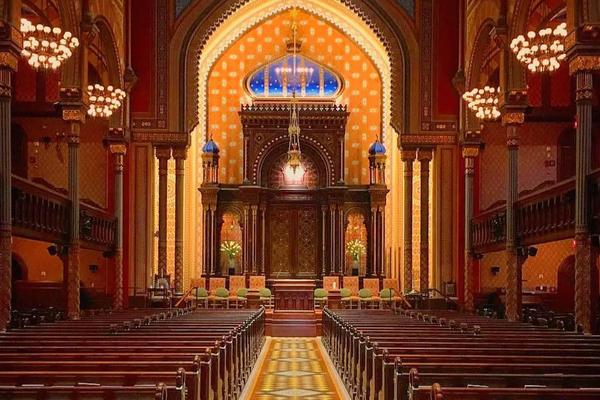
I have heard the arrangement defend itself a million times from the pew: this is God's house, and where two or three are gathered in My name, there am I in the midst of them, Matthew 18:20. The verse says the opposite: He is in the midst of the two or three, in any room, and no building is named. What I hear in it is the Holy of Holies going back up in drywall, a room men control and call His, with the price of the room demanded as the offering, which is penance by another name.
Here is my view, and it is the last charge. Christianity is a man-made system. It is not what God intended. He said what He intended: that I may dwell among them. Yeshua came to remove the Jews from religion, not to remove the world from Judaism.
Come now, let us reason together: that is how He ended His own charge against His own house, Yeshayahu, Isaiah 1:18, and it is how I end mine. I am not telling you to leave your building, and I am not telling the man at the front to leave his. Brother, hear me: the room is larger than the building, I may dwell among them was never taken back, and the partition was torn from the top, by Him, on purpose. The prophets had one word for what comes after, shuv, come back. You do not need me to walk you in. The veil is torn, the way is His flesh, and it is open. Come through it yourselves.
Selah
Name the last sermon you heard that began with the breath in Genesis 2 and ended with the dwelling in Revelation 21. If you cannot, name what it began and ended with instead.
When you pray, where do you picture Him: walking toward you, or behind a door someone else opens? Say where the picture came from.
At Sinai the people asked for someone to stand between them and the voice, and HaShem said they had spoken well. Was the go-between a mercy for a people who could not bear the fire, or the first stone of the wall? I do not know which it was for them. Which is it in your week?
Tonight, read Bereshit, Genesis 3:8, then Shemot, Exodus 25:8, then John 1:14, then Revelation 21:3, in that order. It takes about ten minutes, and no one reads them to you.
It took me three years of writing at this table and a study through Revelation before the gatekeeping story came clear, and it is still coming clearer.
May the shalom of our Abba guard your study and your wrestling, shalom v'shalvah. Your brother in the Way, Sergio
Discussion
0 repliesNo replies yet. Be the first to respond.