
Rome mediated, and burned the men who handed out keys. Protestants gatekeep. For years I aimed the first charge at the second church, and for the life of me I could not understand why nobody was taking it seriously.
I've done everything in my power to get this message out to people for the last few years. The veil tore. The cup went into the hands of friends. The mediator was retired, and no man stands between you and the Father any longer. I've said it a dozen times and written it a dozen ways, and still, no real resonance. The message is not being heard.
It was also the wrong shape.
Not false. Unsharpened. I was carrying an indictment shaped for one crime and pressing it against a different one, and I could not work out why it kept sliding off the people I most wanted it to land on. I have watched men nod at me and walk out unchanged more times than I want to count. I assumed I was not saying it well enough. I was saying it fine. The message was right. It just needed the stone, and the whole edge comes down to one word.
Brother, hear me. The word I kept screaming was mediation. The word on the point of the blade is gatekeeping. And the distance between those two is the distance between a charge Rome cannot survive and a charge that convicts the room you are sitting in this Sunday.
The Word I Was Screaming
I want you to understand the case I was making, and how strong it was. I'm not taking it back. Sharpening a thing is not taking it back.
Yirmeyahu promised two things about the covenant that was coming, and we tend to read the first and skip the second. First, the Torah moves inside: "I will put My Torah within them, and on their heart I will write it", Yirmeyahu, Jeremiah 31:33. Second, and this is the clause that should have stopped every one of us cold: "And no longer shall each one teach his neighbor and each his brother, saying, Know YHWH, for they shall all know Me, from the least of them to the greatest", Yirmeyahu, Jeremiah 31:34.
No more middleman. The defining feature of the new covenant, named by the prophet who promised it, is unmediated knowledge of HaShem. When Yeshua (Jesus) lifted the cup and said this cup is the new covenant in My blood, He was not founding a rite. He was handing His friends the thing the prophet had sworn was coming, and the thing itself retires the man in the middle. I walked all of that at length in Communion: What It Really Is, and Why I Refrain, and I will not re-run it here.
Years before that, I said a related thing about the room instead of the text. I wrote that the church had taught conclusions instead of discernment, that it had handed people the fish and never the fishing, and that a believer who cannot think biblically will always be led by personality instead of Scripture. That piece is The Church's Quiet Crisis, and I still stand on every line of it. What I did not do there was diagnose the structure. I described the symptom accurately and never named the disease, and then I spent the next several years treating the wrong one.
Why Nobody Flinched
This is the thing I was missing, and it was sitting in the responses the whole time. I just didn't see it.
Say no mediation to a Protestant and he agrees with you.
He does not squirm. He does not get defensive. He nods, and then he quotes it back at you before you have finished the sentence: "For there is one God, and one mediator between God and men, the man Messiah Yeshua", 1 Timothy 2:5. And he means it. He is not being slippery. He has believed that his whole life, it is printed in his confession, his tradition was founded on saying it out loud against Rome, and he will out-argue you on it if you push.
I was walking into rooms and prosecuting a count the jury had already returned. Five hundred years earlier.
This is why nobody flinched. A charge that costs the hearer nothing is not a charge. It is a compliment he has learned to receive politely. And the whole time I was collecting those agreeable nods, the actual mechanism was running in the room behind him, unnamed, because the word with an edge on it was not the one I had brought.
The Charge He Actually Brought
So I went back to look at what Yeshua actually said, and what He said was sharper than anything I had been saying.
Go find the men He was hardest on. Not the ones He corrected, not the ones He warned, the ones He pronounced woe over. Read Matthew 23 and Luke 11 and notice who is standing there.
It is not the priesthood.
That distinction is the whole essay, so slow down on it. The kohanim [priests] ran the sacrificial system. They handled blood, altar, and the Holy Place. They were the mediating class, structurally and by definition, and if mediation were the charge on His heart then the Temple establishment is where the woes should have fallen. The scribes and the Pharisees were something else. They were the interpreters. They held the tradition, the ruling, the sense of the text, the answer to what does this passage mean. They were not the mediating class. They were the teaching class.
If you are already reaching for the whip and the flipped tables to object, good. Hold that scene. We are coming back to it, and it is not about what you think it is about.
And that is where the woes fall.
"Woe to you lawyers, for you have taken away the key of knowledge. You did not enter yourselves, and you hindered those who were entering", Luke 11:52.
"But woe to you, scribes and Pharisees, hypocrites, for you shut the kingdom of heaven in people's faces. For you neither enter yourselves, nor allow those who would enter to go in", Matthew 23:13.
Read what He charges them with. Not you have inserted yourselves between men and atonement. He says you took the key. He says you shut the door. He says you did not go in and you would not let anyone else go in either.
The severest words He ever spoke were aimed at the interpretive class, and the crime was custody of access. I had been prosecuting the priest. He was prosecuting the teacher.
A Key Is Named for Opening
The vocabulary is worth slowing down over, because the words themselves carry the accusation.
The Hebrew for key is מַפְתֵּחַ (mafteach), and it is built on the root פתח (patach), to open. That is the shape of the word. The object is named after the act of opening. Hebrew is not naming a locking device, it is naming an opening device, and the noun cannot be spoken without the verb open sitting inside it. There is no Hebrew word for key that means the thing that keeps you out.
Then look at what the Greek does with the same scene. In Luke 11:52 the word is κλείς (kleis), key. In Matthew 23:13 the verb is κλείω (kleio), to shut. Same root family, split against itself. They were handed the opening thing and they performed the shutting act with it.
And ask what the key was to, because the object of the theft is the loop this piece closes. Luke's Greek says the key of gnosis, knowledge. But stand the sentence back into the Hebrew frame and the word underneath is da'at (דַּעַת), and da'at is not information. It is the knowing built on yada, the verb Scripture uses when a man knows his wife. It is the knowing Hoshea mourned: "My people are destroyed for lack of da'at", Hoshea, Hosea 4:6. And it is the knowing Yirmeyahu promised to everyone in the covenant Yeshua sealed: they shall all know Me, from the least of them to the greatest. Put the charge together, then. The key they confiscated was the key to knowing Him, and the thing they locked was the exact thing the new covenant had just promised to every child in the room. That is why the woe is as hot as it is.
Hold the discipline here, because this is where a word study goes wrong. The root does not prove the doctrine. Usage governs, and the argument stands on what these men were charged with doing, not on an etymology. The root only tells you how badly the tool was misused. But that much it does tell you.
And then Matthew 16:19, where the keys get handed out. He says it first to Kefa (Peter), and Rome has built a throne on that singular. Keep reading. Two chapters later He hands the identical binding and loosing to the whole assembly, Matthew 18:18, and the men receiving it were fishermen and a tax collector, talmidim [disciples] with no credential of any kind. There was no examining board. Nobody was ordained. He put the opening things into the hands of laborers. Of course He did. The covenant He was cutting had just promised the knowing to everyone.
Rome Mediated, and Burned the Men Who Handed Out Keys
Now watch what got built, and watch it in the right order, because Rome did two separate things and we have only ever prosecuted one of them.
Rome mediated. Priest between the man and HaShem, absolution through an office, grace administered by a system. That is the charge I have been bringing, and it lands, and Rome cannot survive it. I have written about how the institution got assembled in There Were No Jews at Nicea, and the machinery is not in dispute.
But Rome also gatekept, and it gatekept the loud way.
It forced Latin. The Vulgate became the only authorized text in a Europe where almost nobody spoke Latin, which is not an accident of history, it is a design. In England, Arundel's Constitutions of 1408 made it a crime to translate Scripture into English or to read such a translation without a bishop's license. Wycliffe had already died, so in 1428 they dug up his bones and burned them and threw the ash in the river. Jan Hus went into the fire in 1415. William Tyndale, who wanted a boy behind a plough to know more Scripture than the prelates did, was strangled and burned at Vilvoorde in 1536.
Say the hard part about Tyndale out loud, because a careful reader will raise it and it does not help him: the court that killed Tyndale was an imperial one in the Low Countries, not a papal one in Rome. Fine. The law that made an English Bible a capital crime was churchly law, Arundel had been on the books for over a century, the men who hunted him across two countries were churchmen, and he was condemned as a heretic and degraded from the priesthood before they killed him. The jurisdiction was imperial. The crime was translation.
Nobody has to be argued into seeing that gate. It had a lock on it and a fire beside it.
And that visibility is exactly the problem. A gate that obvious teaches you that gates are obvious. It trains your eye for locks and flames, and it leaves you completely unequipped to notice the second gate, which has neither.
The Reformation Handed Back the Cup and Kept the Key
So the Reformation came, and it broke the first mechanism for real. I am not going to be stingy about this. Mediation went. Sola scriptura. The priesthood of all believers. The book in the vernacular, in the hands of ordinary people, printed faster than anyone could burn it. That was a genuine work, and men died for it.
What it did not break was the custody.
Tyndale is the hinge, and he is the reason this piece hurts. He said he would cause a boy that driveth the plough to know more of the Scripture than the prelates did. Rome killed him for it. And the tradition that keeps him as a martyr inherited exactly what he bought: the ploughboy has the book. It is on his nightstand, in his own language, and nobody will burn him for owning it.
And he still cannot read it. And he still waits until Sunday to be told what it means.
Tyndale's death purchased an access that his own heirs never taught anybody to use.
I have argued the institutional half of this before, in Your Pastor Doesn't Know His Bible, and I do not take back a word of it: a man formed inside a system that trains him to read Scripture through his tradition will hand you the tradition and call it the text. That piece named the machine. What it did not do is name the mechanism, and the mechanism is where the two churches finally separate.
Rome's gate had a lock and a fire, so everybody knew it was a gate.
Protestantism's gate has no lock at all. It has a man standing in front of it who has always answered your questions for you. That is why you never learned to walk through it, and it is why it has never once occurred to you that you could.
The mediation went away. The key did not change hands. It changed pockets.
Sunday Morning, Right Now
I am going to take away the exit before you reach for it, because I know which one you want.
Grant him everything. Grant him the Greek and the Hebrew. Grant him a right reading of every passage he has ever preached. Grant him a good seminary, an honest heart, and thirty years of faithful study. Grant him every single thing that other essay denies him.
He is still a gatekeeper.
The problem was never his knowledge. The problem is that he keeps it.
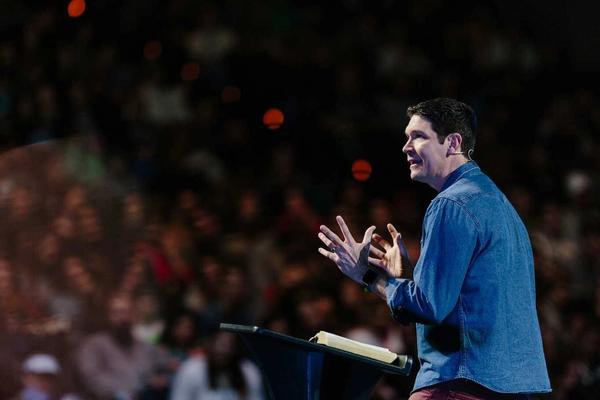
A man opens the text. He tells four hundred people what it means. He does not teach one of them how he got there. He may be gentle, he may be correct, he may love those people more than you know. None of that touches the structure, because gatekeeping describes what a structure does, not what a man feels.
You are going to want to say but my pastor is a good man. I believe you. A good man holding the key is still holding the key.
So I will set it down where nobody can miss it, and you can hold it against everything that follows:
If your pastor is not teaching you how to think critically about Scripture, how to analyze it in its original context as its original audience heard it, if he is not putting the tools and the resources into your hands and urging you not to take his word for anything, then whether you like it or not, that is not biblical; it is gatekeeping.
One hundred percent.
And Yeshua would enthusiastically smash his pulpit.
That last line is not rhetoric. He has done it before. He walked into the Temple courts and turned the tables over, and the verse He was quoting while He did it tells you what provoked Him: "My house shall be called a house of prayer for all the nations", Yeshayahu, Isaiah 56:7. The tables He flipped were set up in the one courtyard the nations were permitted to enter. Men had built their operation in the access lane, and He put it on the floor. And if enthusiastically strikes you as too strong a word for Him, take it up with the talmidim, because it is the recorded one. Watching Him do it, the words that came to them were "Zeal for Your house will consume Me", John 2:17, quoting Tehillim, Psalm 69:9. Zeal, consuming zeal, is the eyewitness gloss on what pulpit-smashing looks like from a few feet away. A pulpit that stands between a congregation and the text is furniture in the access lane.
The Sanctuary Is the Gate
But I owe you the mechanism, because I have made an accusation that sounds unfair on its face. A man gives his opinion about a passage. How is that gatekeeping? People give opinions all day.
So set the terms down before we walk the room, because I have been leaning on them for half this essay and you deserve their definitions.
The gate is access. Not access to salvation; He alone holds that. Not access to the Father in prayer; the veil already tore. The gate in this piece is access to knowing Him through His own word: the place where a person meets the text and the text is allowed to do its work on him. That is the doorway of Luke 11:52. The key that fits it is the key of da'at.
A gatekeeper is a man who stations himself in that doorway and administers the passage. He does not have to lock anything. He only has to make himself the way through. If the text reaches you already interpreted, if the meaning arrives pre-decided and your part is to receive it, then a man is standing in your doorway, and it does not matter how kind his face is while he stands there.
And here is what makes the position illegitimate rather than merely unfortunate: the covenant abolished the job. That was the burden of Yirmeyahu's promise from the beginning of this piece: no more of each man teaching his neighbor, saying Know YHWH, because they shall all know Me, least to greatest. Yochanan (John) says it to believers with no cushion at all: "the anointing you received abides in you, and you have no need that anyone should teach you", 1 John 2:27. Neither verse outlaws the equipper; Scripture commissions him, and we will watch it do so before this piece is done. What the covenant abolished is the broker: the man through whom the knowing must pass.
So hold the question the definitions leave behind, because it is the question of this entire essay. If the covenant means we no longer need men to teach us, what is a man doing climbing the platform every seven days to do exactly that, with nothing in his hands but his opinion of a passage?
Watch the room answer it. Look at what the room forbids you to do about it.
I told you in the communion piece that I still accept the invitations, three or four different congregations in some months, and that I go to listen and to learn the rooms. This is what the rooms taught me.
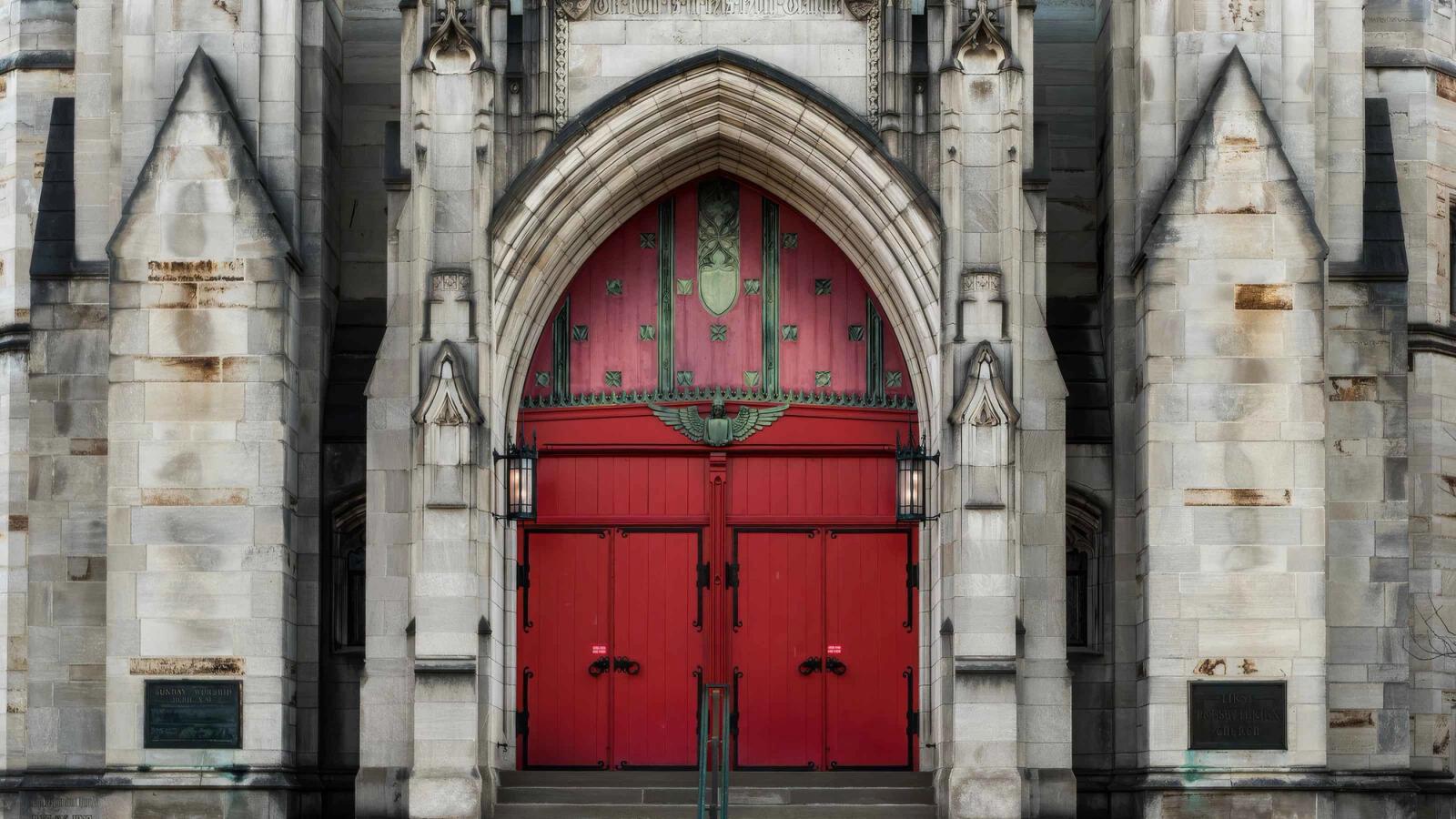
Start with what the room is called. The sign in the hallway says sanctuary. Hold that word up to the light, because it is testifying against the building. A sanctuary is a מִקְדָּשׁ (mikdash), and the mikdash got its charter in one sentence: "And let them make Me a sanctuary, that I may dwell in their midst", Shemot, Exodus 25:8. In their midst. The entire stated purpose of the only sanctuary HaShem ever commissioned was nearness, His presence set down in the middle of the people. So watch what the room wearing that name actually does with the middle.
The chairs are bolted facing one direction. The platform is raised above the floor. There is exactly one microphone in a room of four hundred people. There is a block of time on a printed schedule with his name on it and nobody else's. And then there is the thing no one ever wrote down and everyone in the building knows anyway: if you stood up in the middle of the sermon and said wait, go back, how did you get that out of the Hebrew, it would not register as a question. It would be an incident. Somebody would walk you out to the lobby.
That is the gate. Not the opinion. The opinion plus the impossibility of testing it in the moment it is handed to you. The sanctuary you are sitting in is the gate, and the name on the sign is the confession: a room chartered for dwelling in the midst, rebuilt so that everything flows from the front.
A claim you cannot question on the spot is not teaching. It is transmission. He is not required to defend the reading, you are not equipped to test the reading, and the format guarantees both of those conditions at the same time. No open mic. No right of interruption. No floor to be recognized from. Take one man's opinion, strip out every mechanism by which it could be examined, and run it weekly for thirty years, and you have not taught anybody anything. You have installed something.
You are not a fool for having sat there. Hear me on this before you carry it one more minute.
You read that room correctly. Everything in it was telling you where you stood: the direction of the chairs, the height of the platform, the printed schedule, the hush. You understood the architecture accurately and you behaved accordingly, and that is not passivity. That is literacy. You read a room that was built to be read exactly that way, and you read it right.
And the thing that kept you quiet was not cowardice. It was faithfulness. It was teachability. It was respect for a man handling holy things, and I am not going to take any of that away from you, because those are real virtues and you were right to have them. They just need somewhere better to go.
The Bereans got called εὐγενέστεροι (eugenesteroi), more noble, and it is worth asking what they did to earn the word. They audited an apostle. Sha'ul (Paul) preached, and they went home and dug through the Scriptures every day to see whether the man was telling the truth, and Luke does not call that suspicious or divisive. He calls it more noble than the reception Sha'ul got in the previous town.
Asking is the faithful act. It was never the rebellious one.
He Could Be Interrupted
And once you see the format, you cannot read the Gospels the same way, because His whole ministry is interruptions and He never once treats one as a breach of order.
Start where He starts. At twelve years old, in the temple, He is found "sitting among the teachers, listening to them and asking them questions", Luke 2:46. Both verbs. Listening and asking. That is the room He was formed in, and it is a room where a boy may interrupt a teacher.
Then it never stops. The talmidim break in mid-teaching: explain the parable to us, Matthew 13:36. Why do you speak to them in parables, Matthew 13:10. A lawyer stands up in the middle of a scene to test Him, Luke 10:25. Four men tear a hole in a roof directly over His head while He is speaking and lower a paralytic through it, Mark 2:4, and He does not rebuke a single one of them for the interruption. Jairus cuts in. A woman stops Him mid-walk. The record is one long sequence of people breaking in, and the pattern of His response is the argument.
Then look at Sha'ul in the synagogues, because Luke's verb choice is doing work we read straight past in English. The word is διαλέγομαι (dialegomai), the root under our word dialogue: to reason, to converse, to argue back and forth. Luke uses it for Sha'ul again and again, in Acts 17:2, 17:17, 18:4, 18:19, 19:8, 19:9, 20:7, 20:9, and 24:25. Not proclamation into a silent room. Argument running in both directions.
And then the passage that should settle it.
"Let two or three prophets speak, and let the others weigh what is said. If a revelation is made to another sitting there, let the first be silent. For you can all prophesy one by one, so that all may learn and all be encouraged", 1 Corinthians 14:29-31.
Read what that actually commands. The man currently speaking is ordered to stop, so that a man who is sitting down can speak. And the congregation is given a job: let the others weigh what is said, διακρίνω (diakrino), to evaluate, to discriminate, to judge between. The seated have standing. The speaker is accountable inside the room, in real time. And the stated purpose of the arrangement is so that all may learn.
And notice what kind of speech was on the floor when he commanded it. Prophecy. Words claiming to come from HaShem Himself, and the room was still ordered to weigh them. Every Hebrew ear at that assembly knew the form: kal v'chomer [light and heavy], the argument from the lesser to the greater. If the room must weigh a prophet, how much more a man explaining a passage. The sermon does not get the exemption the prophet was denied.
I will be honest about the seam here rather than let you find it later. Four verses on, the same chapter says something about silence in the assembly that has been fought over for centuries, and I am not going to pretend those verses are not sitting there. Whatever you conclude about them, they cannot mean that the assembly Sha'ul has just described, the one where the speaker yields the floor and the congregation weighs the teaching, is not the assembly he meant. He wrote both. The interruptible room is his room.
So set the two formats side by side and do not decorate the comparison.
The format Sha'ul commanded is the format the modern service forbids. Not neglects. Forbids.
They Tried to Make Him a Gate
And Sha'ul knew the reflex from the inside, because he watched a congregation try to build a gate out of him, and he tore it down while the concrete was still wet.
The Corinthian assembly had begun wearing teachers like team colors: "each of you says, I am of Paul, or I am of Apollos, or I am of Kefa", 1 Corinthians 1:12. His answer comes back with heat on it: "Is Messiah divided? Was Paul crucified for you?" Then he flattens the entire teaching class down to a work crew: "What then is Apollos? What is Paul? Servants through whom you believed... I planted, Apollos watered, but God gave the growth", 1 Corinthians 3:5-6. And then the inversion that should govern every congregation that has ever gathered around a gifted man: "So let no one boast in men. For all things are yours, whether Paul or Apollos or Kefa... all are yours", 1 Corinthians 3:21-22.
Read the direction of that sentence until it lands. You are not of Paul. Paul is yours. The congregation does not belong to the teacher; the teachers belong to the congregation, handed to it as servants, and the growth never belonged to either of them. The man who had the best claim to gatehood in the history of the assemblies refused it in writing: do not organize yourselves under my name.
And before you file that under first-century problems, listen to the church lobby. The sentence is still in use; we only changed the preposition. Nobody says I am of anymore. We say I sit under. I sit under his teaching. Sha'ul heard I am of Paul and asked whether Messiah had been divided. We hear I sit under every week, and nobody flinches. And notice which preposition we traded up to. Under. The architecture got into the grammar.
What the Torah Already Commanded
None of this began in Acts. The instinct is older than the assembly, and it was law before it was practice.
"And you shall teach them diligently to your children", Devarim, Deuteronomy 6:7. The verb behind teach diligently is שָׁנַן (shanan), to whet, to sharpen. The picture is a blade taken to a stone over and over until it has an edge. That is the pedagogy, and notice who is assigned to it. Not a class. Not an office. Parents, at home, while sitting and walking and lying down and rising up. The Torah's own delivery system runs through the kitchen, and it is repetition until the child is sharp.
Then hakhel, Devarim, Deuteronomy 31:12: "Assemble the people, the men and the women and the little ones, and the sojourner within your towns, that they may hear and learn." Everybody. The women, the children, the foreigner who wandered in. Not a qualified remnant who could be trusted with it. All of them, hearing it directly, so that they may learn it.
And when Israel finally comes back to the book in Nechemyah (Nehemiah) 8:8, watch what the Levites do with their advantage: "They read from the book, from the Torah of God, clearly, and they gave the sense, so that the people understood the reading." They had the skill and the people did not, and what they did with the gap was close it. They gave the sense so that the people understood. That is the opposite of keeping it. A man with an advantage either spends it on you or spends it on himself, and Nehemiah 8 is what spending it on you looks like.
Which is the whole job, and Sha'ul says so outright. The gifts were given "to equip the saints for the work of ministry", Ephesians 4:12. καταρτισμός (katartismos), equipping, outfitting, putting into working order. A teacher's assignment is to make himself unnecessary. A man who has made himself permanent has not merely failed at the job. He has inverted it.
I have said this before, from a different watchtower. In Born Again Patriot I put it to the pastors directly: if you really knew your Bibles, you would be teaching people how to stand outside the system, equipping the saints to stand alone on the word of HaShem and not on the ideas of men. I wrote it there as a warning about where the system is headed. I am writing it here as exegesis of what the text has commanded all along. The warning and the command turn out to be the same sentence.
The Only Exception, and It Is Narrow
There is one kind of teacher this does not describe, and I want to be precise about him, because if I leave it vague every reader will decide his own man qualifies.
He is recognizable by five marks.
Number four is the one that decides it. A man can show you every step of his work and still hand you the conclusion at the end, and the moment he hands you the conclusion he has done the digging for you. You walk out with an answer you cannot reproduce without him, which means you walk out needing him, which was the whole problem.
Number five is the one you can test this Sunday. It costs nothing. You do not have to confront anybody, you do not have to know a word of Hebrew, and you do not have to say anything at all. Just sit there and notice whether anyone ever speaks who is not holding the microphone.
You will not be able to unsee it.
And one more word, not to the congregation this time. If you are the man holding the microphone, the one who has spent years sharing what he thinks the passage means without once teaching the people in front of you how to dig it out themselves: shame on you.
I did not reach for that phrase. Sha'ul did. "I say this to your shame," he wrote to an assembly that had left its own people unable to judge the smallest matter without outside help, 1 Corinthians 6:5. The failure he was shaming was an equipping failure, and so is yours. But hear the other half. The five marks above are not a wall built to keep you out. They are your job description, and every one of them is something you could begin this Sunday. Hand out the tools. Empty the lobby. Work yourself out of the room.
The Door He Set Open
Brother, stay with me for this last stretch, because my heart is to leave you somewhere much better than an indictment.
There is another key in Scripture, and it is not in anybody's pocket. "And I will place on his shoulder the key of the house of David; he shall open, and none shall shut; and he shall shut, and none shall open", Yeshayahu, Isaiah 22:22. Yeshua takes that line and puts His own name on it: "The words of the holy one, the true one, who has the key of David, who opens and no one will shut, who shuts and no one opens. Behold, I have set before you an open door, which no one is able to shut", Revelation 3:7-8.
Sit with what that means against everything above.
They took a key that was named for opening and they used it to lock. Rome did it with Latin and fire. Their heirs did it with a platform and a schedule and a silence nobody ever had to enforce. And all the while, the actual key was never in the building, because it was never theirs to hold. It is on His shoulder. He opens, and no man shuts it.
And before I hand you the good part, hear the verdict one last time, because past everything you have now read it stands beyond excuse. If the man in your pulpit shares his conclusions and keeps the tools, he is a gatekeeper. Gentle, a gatekeeper. Correct, a gatekeeper. Loving you more than you know, still a gatekeeper, whether you like it or not. I am repeating myself on purpose. This is the sentence I could not find for years, and I am not going to bury it now that I have it.
The door is already open. It has been open the entire time you were waiting for somebody to tell you what the passage means.
You were never locked out. You were only ever told to wait in the lobby, and you believed it, because a good man told you gently and every chair in the room was pointed at him.
Go in.
Selah
Sit with these before you move on:
- When was the last time you found something in the text yourself, that no one handed you? If nothing comes, that is the finding.
- Who currently holds your key? Name him. Then ask what he has done in the last year to give it to you.
- Run Mark 5 this Sunday. Does anyone ever speak who is not holding the microphone? What does the room do to the person who tries?
- If asking is the noble act, what have you been calling it instead, and who taught you to call it that?
- If the door has been open the whole time, what has actually been keeping you in the lobby?
Shalom v'shalvah, your brother in the Way,
Sergio