Covenant & Torah
61 essays carry this tag, newest first.
Essays



The Heart Hires the Mind
Romantic logic, the logic that defends Western Christianity, and the prophet who diagnosed both.

Audacity
This essay is a meditation on the working life of Ya'akov ha-Tzaddik
Working under the anointing
Bringing the creativity of the Creator into your daily life
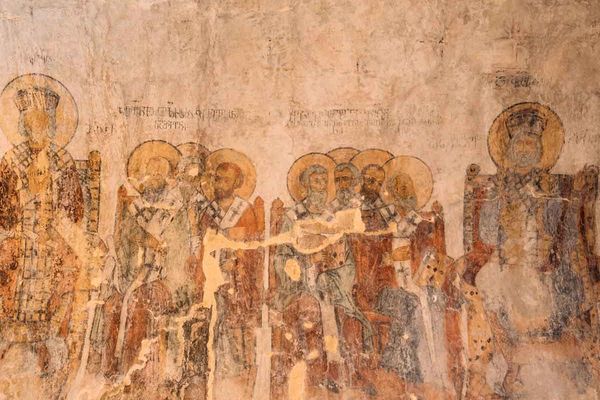
There Were No Jews at Nicea
There were no Jews at the Council of Nicea. That absence was not an accident; it was decreed by one empire, defended in the emperor's own letter, and enforced for centuries. What the severance cost, who carried the thread anyway, and why the whole record is evidence for Yeshua, not against him.

We needn't see in a mirror dimly
Paul was quoting the Torah in Numbers 8
Titles He Refused
Yehoshua accepted every name that described work he was doing and refused every name that would have frozen that work into a chair only one person could sit in, which is why calling him a rabbi hands him both an office that did not yet exist and one of the three titles he explicitly declined. The refusal was a governing rule about how his people would organize themselves rather than a gesture of modesty, and the movement that preserved it abandoned it within three centuries.
He Lived It for You, Not Instead of You.
Christianity says Yeshua lived a perfect life as a substitute for yours. Read tamim in Hebrew and a different picture appears: not a spotless record waiting to be transferred, but a whole man shown to you. A word study, a doctrine with a birthday, and the question almost nobody asks about what the life was actually for.

The Torah David Longed to Keep
Psalm 119 is not a praise poem. It is one hundred and seventy-six verses of a man who loved the Torah and could not keep it, begging to be changed from the inside. The new covenant is the answer to that cry, and from Yeshua's own mouth to the last letter of Yochanan, the Brit Chadashah is standing exactly where the psalm stood.

Ramifications of the New Covenant
Learning to know [yada] the Lord
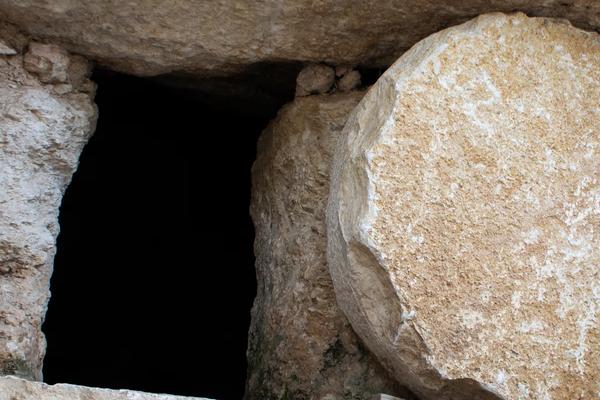
The Grave Was a Mikvah
Ask what happened in the three days between the cross and the empty tomb and you will get one of two answers: a holy pause, or a raid on hell. The Hebrew was built to say something else. The grave was a mikvah, the immersion of the new covenant itself, and what came up out of that water was a crowned King and a heart of flesh. Down a servant, up the King, and the water He rose through is the same water you were buried into.

Communion: What It Really Is, and Why I Refrain
He put the new covenant in His own blood into the hands of His friends, and we turned it into a sacrament. Read Hebraically, the cup is a covenant cut once and sealed forever, not a rite to be re-administered on a schedule by a professional. A sealed covenant cannot be re-sealed, and the covenant that retires the mediator was quietly rebuilt into a priesthood. Why I refrain, and what is still left at the table.

YHWH as Yovel
This theological and socio-economic essay explores the divine Name of YHWH not as an abstract philosophical concept but as the literal acoustic and systemic trigger for the Biblical Jubilee, or Yovel. It argues that the historical movement of the Ebyonim (the dispossessed) understands the sounding of the shofar as a proxy for the raw, distressed outcry (tza'akatam) of the oppressed, framing Christ’s cleansing of the Temple as a deliberate activation of a systemic economic reset meant to shatter imperial debt structures while preserving life through divine intervention.
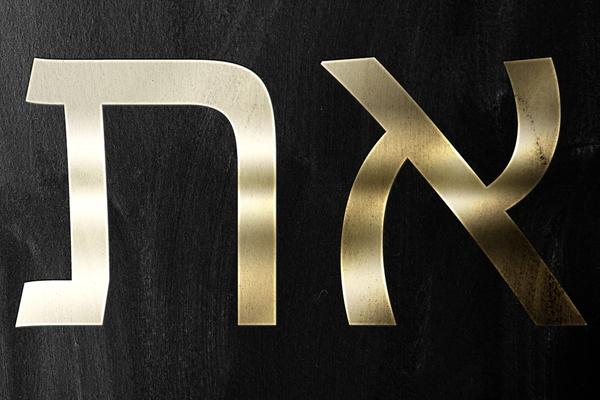
He Did It Himself: The Garden, the Covenants, and the Hebrew Savior Christianity Forgot
The Garden was never a metaphor. It is the concrete foundation of the whole of Scripture. Every covenant after Eden pointed right back to it. Every framework Christianity later built around the cross only added man-made complication. The Hebrew Savior came to restore the Garden. Which is why He had to be both.

Who Inherited the Covenant?
When the title Masch'yah traveled over the Greek bridge to become Xristos, four distinct traditions reached out to inherit the ancient trunk of Covenantal Yahwism. This essay tracks how two of those lines grew into world religions by dropping the hard economic weights of debt release and Jubilee, while the heir that kept the trunk's constitutional substance whole was quietly written out of the will.

Reconnaissance
I went back to a church I disagree with, and for the first time in years I had a good time. I just was not there for the reasons anyone in the room assumed.
Let's Unpack This Thing Called Judaism
This is the story that will not break, held not by the hands of men but by the very word of God. Garden to city, one arc, no rupture. The only faith that came straight from the text, before men fenced it and Rome tried to dissolve it. And the High Priest who returns to Jerusalem to end every institution built in His absence.
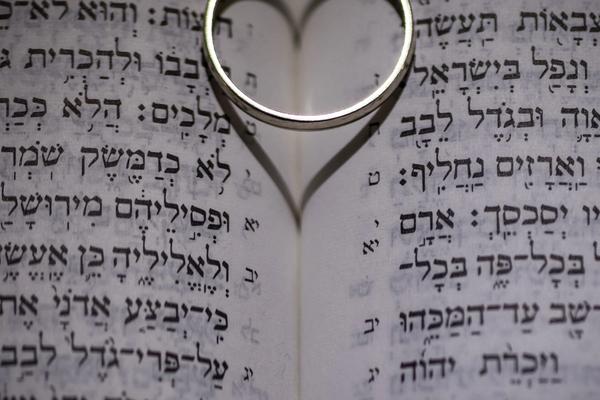
Written on the Heart
The 613 commandments are not the point. The Torah is the Father's own self-disclosure, a letter written so we could know Him, and the Ruach is the One who writes it on the heart. A Hebraic reading of why both the Rabbinic fence and the Western claim that the law is finished miss the very same thing.

Why the Holy Spirit within is so important today
Talking about the trouble both jews who know Messiah, and institutional Christians have with e Holy Spirt. Why it matters.
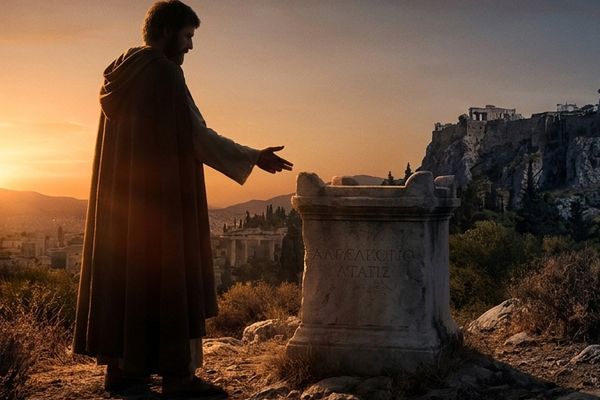
Paul According to the Ebionites
A consolidated portrait of Paul through Ebionite eyes: the Fish of the Great Sea, formed in philosophical Tarsus and trained in Gamaliel's academy, adjudicated a false prophet on four constitutional grounds by the community that knew him best. The verdict stands, and yet the handful of true sentences in his letters belongs to the Covenant tradition whose vocabulary they were written in, and reclaiming them is not generosity toward Paul but repatriation.

Saul Already Knew
The West pictures a proud man thrown from a horse and converted to a new religion. There is no horse in the text, and there was no conversion. Saul of Tarsus was a Torah-trained Jew who, on the Damascus road, finally recognized the One his own Scriptures had been pointing to all along, and followed them all the way home.
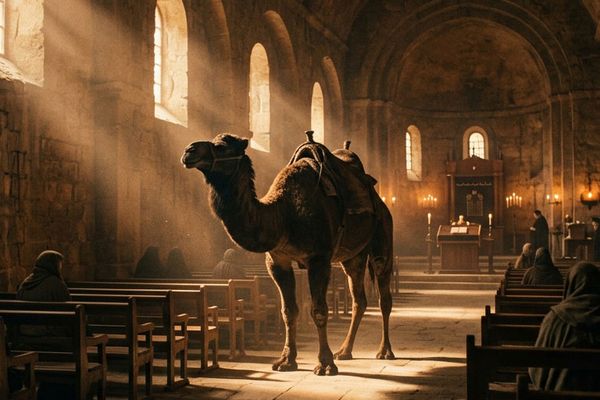
Gnats, Frogs, Camels—Oh My!
Jesus warned against straining out gnats while swallowing camels. In an age consumed by denominational controversies and endless theological debates, have we overlooked a much larger problem? This essay announces the dangers of allowing anti-Judaism and supersessionism into the church.
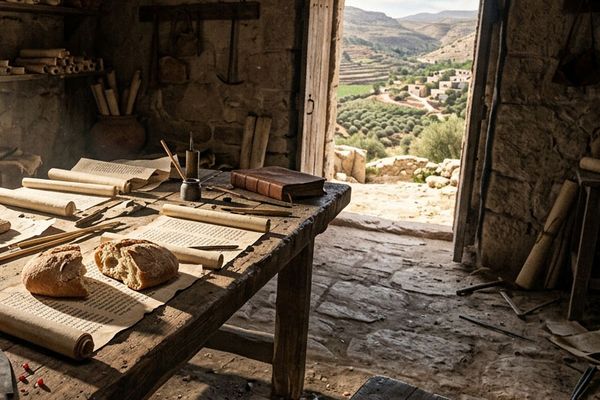
Who Shall I Say Sent Me?
A supply-chain logistician turned mendicant scholar introduces the Archive of the Ebyonim: the wager that the Covenant was never a religion but a constitution for a society that refused to extract, and a map of the books, translations, and stories built to recover it.

The Seven Deadly Misreadings
Genesis 3:16 is not a blueprint. It is a damage report, and the single mistake of reading the curse as the design built seven doctrines, from corporal punishment to the theology that justified slavery. Here is the one fallacy traced through all seven, and the way out Yeshua showed us all along.

The Community You Cannot Build
Church community is sold as the cure for loneliness, but the lobby, the stage, the lighting, and the program are a production, and a production holds you only as long as it runs. The Hebrew edah gathers people around a shared purpose, not a building. You cannot manufacture organic community. You can only become someone around whom it forms. There is one ekklesia, and no program built it.

Christianity Is the System
A Scripture-led wake-up call: everything we call Judeo-Christianity today is a civic institution that mediates access to YHWH through human architecture the text itself never authorized.

The Feast They Were Already Keeping: Shavuot, Pentecost, and the Church's Founding Misunderstanding
Pentecost is not the Church's birthday. It is the appointment HaShem set on His calendar before Israel had a calendar. Shavuot was already there. The Ruach was already moving. You are grafted in, not displaced.

I Will Cause You to Live
Jeremiah promised Torah on the heart. Ezekiel promised the Spirit that makes you walk it.

Falling for a Different Gospel
I was the good Christian girl. Then I read what Jesus said his Bible was about, and the framework I had inherited unraveled.

Submit, Woman: What Ephesians 5 Is Really Saying
The two Greek words your whole frame was built on do not mean what you were told.
Genesis 3:16 Is Not the Plan. It Is the Wound.
The damage report has been handed down as the design document. It is time to read it for what it is.

Identity, Repentance, and Return
How knowing God as Father reshapes identity, breaks generational patterns, and restores what was lost.
“Praying in the Spirit” — Ephesians 6:18
This is a followup to the study of the word of God [rhema theou] as the sword of the Spirit in verse 17
How History Hijacked God
A Hebrew reading of what translation did to the God Yeshua knew.
The Verses PSA Uses to Defend Itself
Part three of a three-part Berean walk through "once saved, always saved." Five verses, original languages. Isaiah 53, Romans 3:25, 2 Corinthians 5:21, Galatians 3:13, and 1 John 2:2. The text speaks for itself.
Shema: The First Thing a Man Must Hear
Before a man leads anything, he listens. The Shema is not a prayer. It is a covenant loyalty oath.
All Israel Will Be Rescued
Romans 11, penal substitution, and the cage men built around the gospel.
She Held It Together. That Was Not Faithfulness.
Most men have not grabbed the crown. They put it down. They walked out of the room, or never walked in.
The Root: Yasha — The God Who Rescues
The Hebrew word behind 'saved' means rescue, not legal acquittal. A root study tracing yasha from the Red Sea through the Gospels, naming what penal substitution changed, and documenting the psychological wreckage it left behind.
What Ezer Kenegdo Actually Means
The Hebrew that demolished "helpmeet", and what it demands of every man at the table.

Unpacking #15: The Breath You Were Never Taught to Recognize
How the Set-Apart Breath of the Living God Became a Theological Third Wheel

What Hebrew Thought Is: Historical Foundations and Why It Matters for Understanding Scripture
A structured introduction to Hebrew and Greek intellectual frameworks — and why the lens you bring to Scripture determines what you actually hear it say.
Elijah Under the Juniper Tree
What HaShem did when his most powerful prophet sat under a desert shrub and asked to die — and what it means for the man who can't say enough out loud.
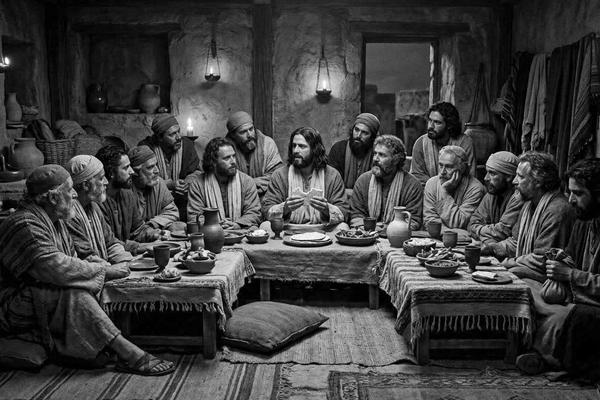
Unpacking #14: From Passover to the Risen Messiah
They Gave You the Finale and Burned the Script
Nothing Missing
The Hebrew Bible was never meant to stay in the academy.
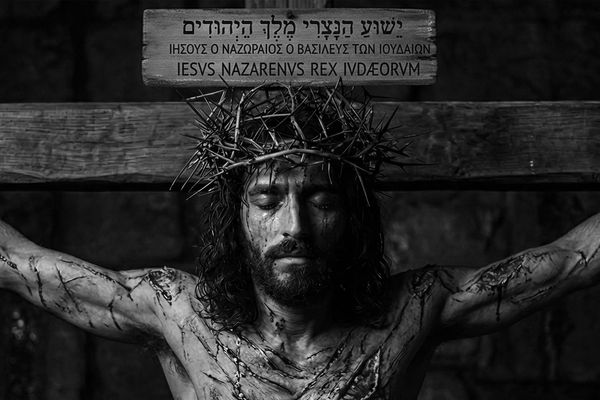
Unpacking #13: The Crucifixion – We Made It Pretty. It Wasn't.
The Crucifixion Was Not a Symbol. It Was a Sealing — and the Crown of Thorns Was Only the Beginning.

Unpacking 11: The Quiet Renovation of God
Most people do not reject God. They renovate Him. This essay traces the cognitive dissonance mechanism behind the renovation, the five-step God Makeover that runs across modern Christian life, and what an honest turn looks like when shuv replaces feeling-as-repentance.

The Doctrine That Ate Itself: What Total Depravity Actually Teaches and What We've Done With It
The doctrine of total depravity contains a logical crack nobody in the Reformed tradition wants to name: willful sin requires moral awareness, but total depravity claims that awareness was annihilated.
The Docket #10 — "God Speaks Through His Son" (Mark Martin, Calvary Community Church)
Three reviews. Same pulpit. Now look at the pattern.
The Docket #7 — "Total Depravity Part 1" (R.C. Sproul, Ligonier Ministries)
The doctrine turns on a Latin mistranslation. The Greek says something different.

He Wasn't Trying to Be Different. He Was Being Faithful.
The outsider is not a personality type — it's what covenant faithfulness looks like from the outside.

The God Who Rations Grace: Why TULIP Doesn't Survive Contact With Real People
If God handpicks who gets saved and damns the rest before they're born — what exactly are you preaching to the homeless?
The Salvation Paradox: Are We Trading Truth for Convenience?
Reevaluating the Essence of Grace: Is Our Simplified View Robbing Us of True Faith?
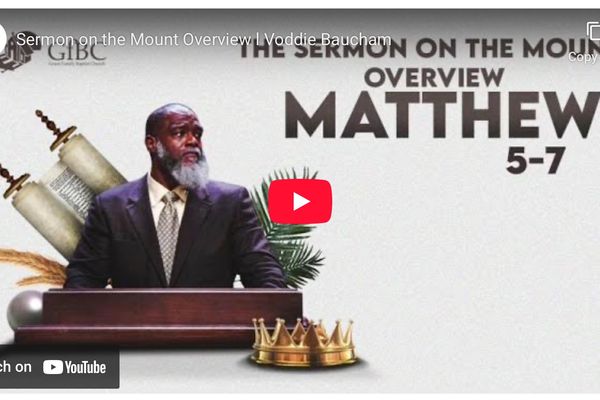
The Docket #3 — "Sermon on the Mount Overview" (Voddie Baucham)
The strongest sermon The Docket has reviewed. The charges are narrower. Narrower charges cut deeper.

What I Was Really Asking Her to Do
A letter that needed to be rewritten
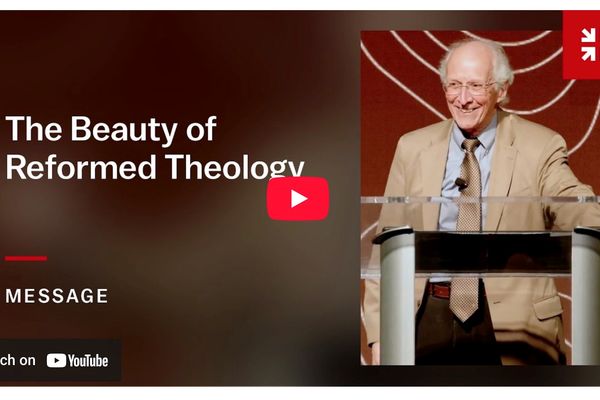
The Docket #2 — Berean Review: "The Beauty of Reformed Theology"
A Berean review of John Piper's defense of Reformed Theology. The system is coherent. Coherent and faithful are not the same thing.
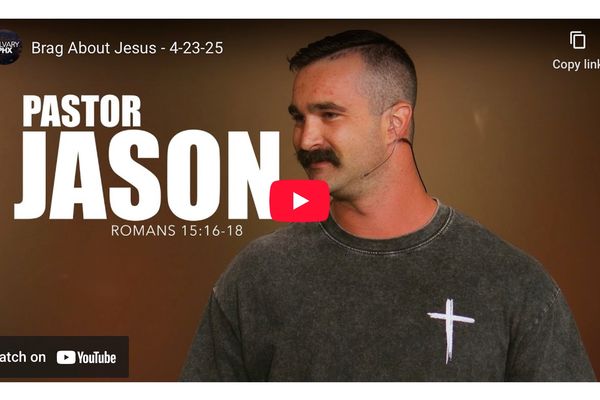
The Docket #1 — Berean Review: "Brag About Jesus"
The sermon was competent, warm, and scripturally grounded. That's exactly where the problem starts.